Every day in the occupied West Bank, Palestinian life unfolds under a system of control that shapes nearly every aspect of daily existence. From the moment people leave their homes in the morning until they return at night, movement, work, education, healthcare, and family life are often constrained by an extensive network of military checkpoints, roadblocks, permits, and restrictions imposed by the Israeli occupation.
The landscape itself reflects this reality. A separation barrier stretching more than 700 kilometres cuts through Palestinian territory, while checkpoints and military infrastructure fragment communities and limit freedom of movement. For many Palestinians, even routine journeys can become uncertain, time-consuming, and stressful.
Israel has illegally occupied the Palestinian West Bank, (including East Jerusalem), the Gaza Strip and the Syrian Golan Heights since the 1967 war. Following the war, Israel began transferring its civilians to settlements established on this occupied Syrian and Palestinian territory. Today, Israeli settlements control more than 42% of the West Bank’s total land, confiscated from Palestinian communities, along with the majority of the region’s water resources.
The settlement enterprise has been widely condemned as illegal under international law. The International Court of Justice, the United Nations Security Council, numerous human rights organisations, legal experts, and the overwhelming majority of UN member states have all challenged the legality of Israel’s settlement expansion.
More than 700,000 Israeli settlers now live in settlements across occupied Palestinian territory. Over decades, an extensive infrastructure has been developed to support these communities, including bypass roads, transportation networks, rail systems, and industrial zones that are largely inaccessible to Palestinians.
Perhaps nowhere is the impact of settlement expansion felt more deeply than in agriculture.
The Impact on Palestinian Land and Livelihoods
For generations, farming has been the backbone of the Palestinian economy and a cornerstone of cultural identity. Yet settlement growth has steadily reduced Palestinian access to agricultural land. Many farmers have lost fields, orchards, and grazing areas to settlement construction, military zones, and security infrastructure.
The consequences extend beyond land loss. Crops and fruit trees are frequently damaged or destroyed during settlement expansion and related activities. Olive trees, in particular, hold deep economic, cultural, and symbolic significance for Palestinian communities. Since 1967, more than 800,000 olive trees have reportedly been uprooted by Israeli forces and settlers.
The loss of these trees represents far more than lost income. Many have stood for generations, connecting families to their land and history. Their destruction can erase decades of labour and sever ties that communities have maintained for centuries.
Rising Settler Violence
Since October 7, 2023, the UN Office for the Coordination of Humanitarian Affairs has documented a sharp escalation in settler violence against Palestinians.
At least 37,135 Palestinians were displaced across the occupied West Bank in 2025, a record high amid Israeli military incursions and settler attacks. Settlers have attacked Palestinians more than 3,700 times in the occupied West Bank over the past two-year period. The number of settler attacks has risen sharply since 2016.
In some areas, repeated attacks and intimidation have left villages largely abandoned. Residents describe living under constant pressure, facing harassment, threats, and violence that often occur with little accountability.
The Human Cost of Occupation
Occupation is not only about territory. It has a massive human toll.
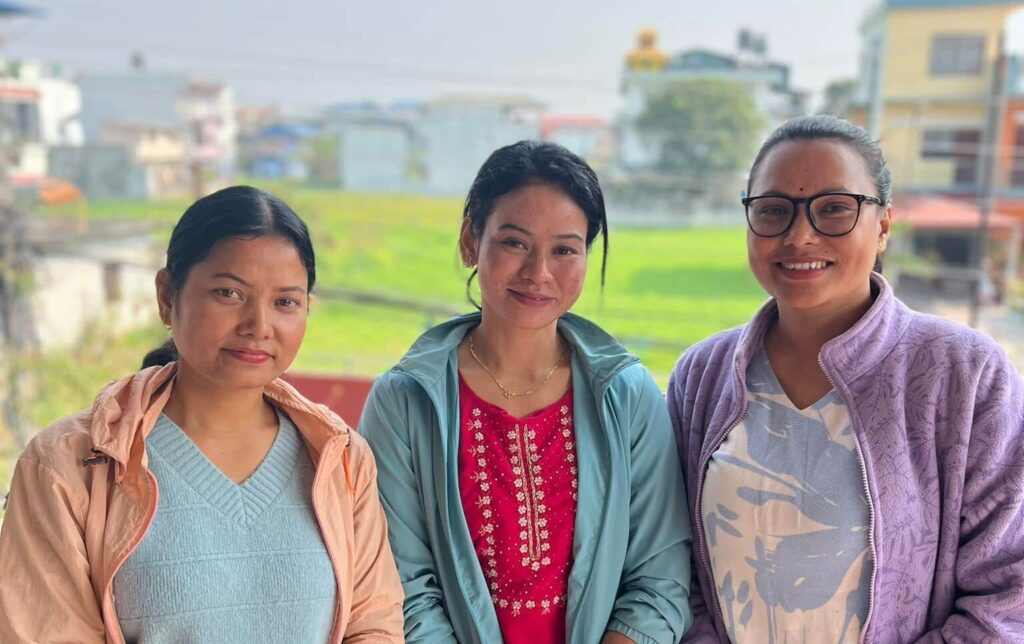
Hanin Nahwi, (pictured above) is supported by ActionAid Palestine and lives in the heavily restricted H2 area of Hebron in the southern West Bank. She lives on Palestinian land, but her movement is not a given right. It is a daily challenge filled with anxiety and uncertainty.
Hanin explains: “In reality, I avoid going out a lot. I try to gather everything I need and do it all in one trip so I don’t face difficulties going or returning. I never know what might happen on any given day. This affects me deeply and keeps me constantly tense. Even thinking about going out makes me anxious from the start.” Such experiences are commonplace.
Among the olive trees he planted years ago, 53-year-old Mahmoud Jabarin spends most of his days on the land of Al-Minya village, south of Bethlehem in the West Bank. The area is surrounded by settlements and outposts, making movement dangerous, especially for women and children.
Mahmoud is a father of five and a farmer who relies on his land as a source of livelihood for himself and his family. But for him, it is not just a source of income, it is part of his life, his memories, and the labour of a lifetime. Like many Palestinians across the West Bank, Mahmoud faces settler violence.
Palestinian farmers are subjected to repeated attacks by settlers targeting their land and livelihoods. These attacks go beyond property damage, destroying years of labour and effort. Breaking and uprooting trees, especially olive trees that take years to grow and bear fruit, is not merely a material loss, but the destruction of life and memories.
This is Israel’s settlement project in action.
A Political Debate in Ireland
Against this backdrop, Ireland’s Occupied Territories Bill has once again become the subject of political debate.
The legislation, which seeks to prohibit trade with illegal settlements in occupied territories, is currently before the Dáil. The Government has defended its position that the bill will not include a ban on services and would primarily affect a relatively small volume of goods traded with settlements each year.
The Government claims there will be an impact on Irish jobs if services are included. But international law is clear: there is no distinction between goods and services.
Last year, the International Court of Justice delivered a landmark advisory opinion that said Israel’s continued occupation of Palestinian territory was unlawful and should end as quickly as possible. The ruling also made clear countries must not recognise, aid or assist in maintaining this illegal situation.
The Department of Foreign Affairs has published an assessment of the bill. It does highlight pushback from the United States, but considers what international law requires, and concludes “the only reasonable reading of the International Court of Justice advisory opinion is that a complete prohibition on trade with Israeli settlements is required”.
International law, and the reality of life under occupation, must guide our actions. A full ban on goods and services is the only way to do this. There are times when taking a stand against injustice matters more. This is one of them.
And you can help!
There is still time for you to email your local TDs and urge them to pass the Occupied Territories Bill with goods AND services included. You can find your TDs name and email address here. Share this blog to raise awareness about why passing the Occupied Territories Bill is so crucial.